Basketball Club Teams San Diego and Their Unique Training Culture
San Diego has never fit neatly into one basketball stereotype. It is not a one-gym town where every serious player passes through the same doors, and it is not a place where winter weather forces the game indoors for months at a time. It is a spread-out county with beach communities, inland suburbs, dense school schedules, military families on the move, and a year-round sports environment that keeps athletes busy in every season. That mix shapes the way Basketball Club Teams San Diego operate, train, recruit, and develop players.
People often talk about club basketball as if it is the same everywhere. It is not. The bones of it may look familiar, weekend tournaments, weekday practices, skill sessions, travel logistics, parent coordination, but the culture can vary dramatically from city to city. In San Diego, the best programs tend to build around adaptability. They have to. Traffic changes practice windows. Gym access can be inconsistent. Athletes split time among school ball, other sports, private trainers, strength work, and family commitments. Some players commute a long way just to train with the right group.
That pressure can either fragment a club or sharpen it. The strongest programs use it to sharpen standards. They become intentional about how they spend time on the floor. They teach players to arrive prepared. They often emphasize versatility because rosters and lineups shift more than outsiders realize. And they create a training environment where habits matter as much as highlights.
What makes the San Diego club scene different
The first thing that stands out is geography. San Diego County is broad enough that a team can draw players from very different communities, each with its own pace and athletic culture. A player from North County may have a different school schedule and commute pattern than a player from Chula Vista or East County. That affects attendance, recovery, and even the emotional rhythm of a season.
The second factor is competition for the athlete’s time. San Diego produces serious talent in basketball, but it also offers year-round options in baseball, soccer, volleyball, football, track, surfing, and strength training. Young athletes here are rarely short on things to do. A club program cannot rely on excitement alone. It has to provide clear developmental value. Families can tell quickly when a practice is just a run-through of set plays and loose scrimmaging. They want structure, coaching, and a sense that time is being used well.
The third piece is mobility. San Diego’s military presence means some rosters include families who understand discipline and commitment but may not stay in one place for many years. That creates an interesting dynamic. Programs often welcome players who are ready to plug into team standards quickly, and coaches learn to teach systems efficiently because they cannot always assume the same group will stay intact over a long stretch.
This is one reason Basketball Club Teams San Diego often develop a culture that prizes teachability. Coaches may not say it with that exact word every day, but they recruit for it, reward it, and notice when it is absent.
Training culture starts long before the tournament
A lot of parents judge club teams by game results. That is understandable, but it can hide what actually separates strong programs from average ones. In most cases, culture reveals itself on a Tuesday night practice, not on a Saturday afternoon bracket game.
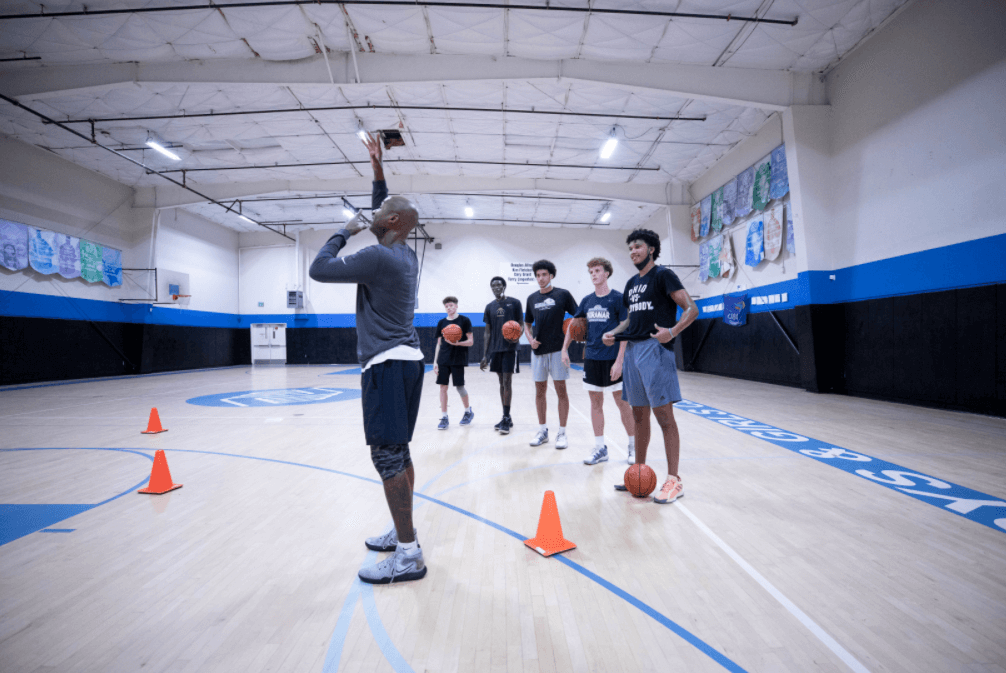
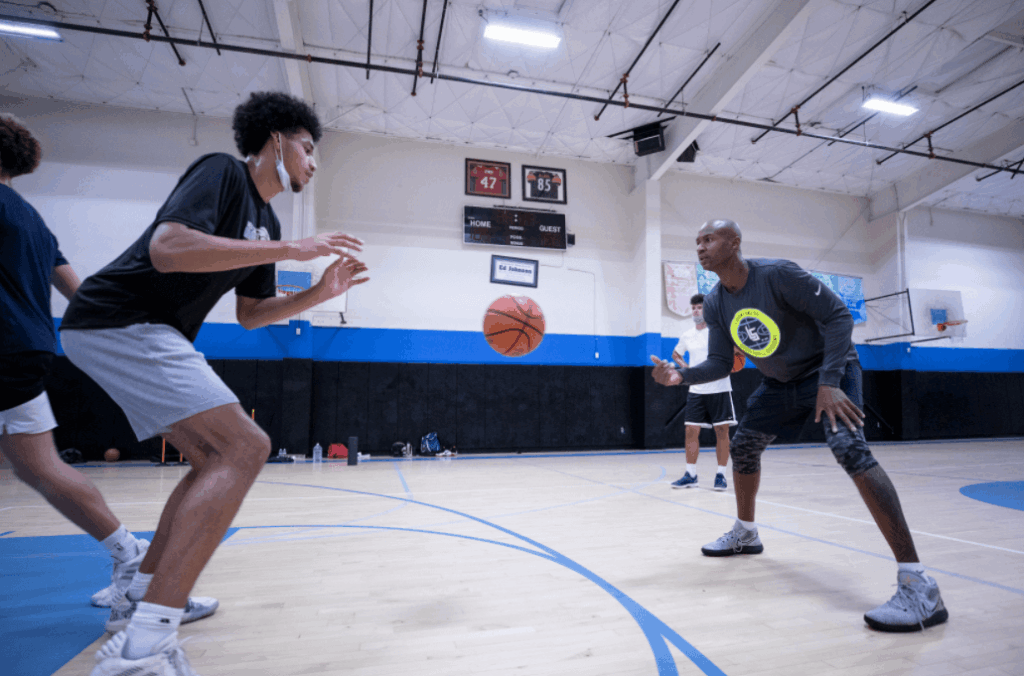
A well-run club session in San Diego usually has a clear tempo. Players are moving with purpose almost immediately. Warmups are not dead time. Footwork, mobility, ball handling, closeout mechanics, passing reads, and finishing angles get folded into the first twenty minutes instead of treated as separate boxes to check. Coaches do not just tell players to work hard. They define what hard work looks like. Sprinting into spots. Talking on the weak side. Catching the ball ready to make a decision. Rotating with discipline even when tired.
This sounds basic, but it is often where programs diverge. Many teams have motivated kids. Fewer have a shared language that turns effort into reliable habits.
San Diego teams also tend to place a premium on efficiency because gym time can be expensive and limited. If a program has ninety minutes, it cannot afford twenty minutes of standing in lines for one-player-at-a-time drills. Better clubs design practice so multiple skills are trained at once. A shell drill becomes a lesson in communication, stance, help position, and rebounding responsibility. A transition segment teaches conditioning, spacing, decision-making, and defensive sprint habits all at once.
That efficiency influences the identity of the athletes who come out of those programs. They often look polished in the less glamorous parts of the game. They know where to stand. They recover quickly after mistakes. They understand when to cut and when to stay spaced. They compete for rebounds outside their area. These details are rarely flashy online, but coaches at the next level notice them immediately.
The best clubs teach players how to think, not just how to perform
One of the most important shifts in youth basketball over the last decade has been the move from pure skill accumulation to decision training. San Diego’s better club environments have leaned into that. They still value shooting form, handle development, and finishing craft, but they understand those tools are only useful if players can apply them at speed.
That means training often includes read-based constraints. A player may be asked to attack a defender’s top foot, make a weak-side read off a tag defender, or choose between a floater and a kick-out depending on the rim protector’s timing. Defensive drills might start with a disadvantage so players learn to scramble, communicate, and recover instead of just rehearsing perfect rotations against no pressure.
The result is a more mature game. Players stop searching for scripted answers and start recognizing patterns. They learn that a possession can demand patience one moment and force the issue the next. They begin to understand the trade-off between trying a difficult scoring move and making the simple extra pass that keeps the offense on schedule.
That style of teaching matters in the club environment because tournament basketball is chaotic. There are quick turnarounds, unfamiliar opponents, uneven officiating, and games where legs go dead late in the day. Teams that only know how to execute in ideal conditions tend to unravel. Teams trained to read the game hold up better when things get messy.
San Diego’s pace creates a special kind of player
There is an interesting balance in the local game. San Diego basketball can produce players who are relaxed in demeanor but sharp in their work. The climate and lifestyle do influence personality. Practices are intense, but many athletes here do not carry themselves with unnecessary drama. They are often coachable, socially aware, and comfortable in mixed groups.
That can be a real advantage on club teams made up of players from different schools and neighborhoods. Chemistry forms faster when athletes know how to share space, accept roles, and compete without constant friction. Good coaches build on that by setting standards that are firm without becoming theatrical. Every coach has a different voice, but in healthy programs the tone is consistent. Corrections are direct. Praise is specific. Accountability applies to stars and role players alike.
I have seen teams with high-end talent underperform because the gym felt tense every time someone missed a shot. I have also seen more balanced rosters improve rapidly because the coaching staff made it safe to be corrected. That distinction matters. Development speeds up when players are not wasting energy protecting their ego.
In San Diego, where many players cross paths through school seasons, open runs, private workouts, and local tournaments, reputation travels fast. A club known for chaotic sideline behavior or unclear communication will struggle to retain serious families. A program known for demanding but fair teaching usually keeps attracting players who want to grow.
The parent role is unusually visible here
Because of the county’s size and scheduling demands, parents in the San Diego club scene are not passive observers. They drive long distances, juggle siblings’ schedules, manage tournament weekends, and often spend a lot of time in gyms and parking lots. That changes the ecosystem around teams.
When parent communication is strong, the environment feels steady. Families know what the expectations are, when attendance matters most, how playing time is approached, and what the developmental goals look like over a season. When communication is weak, small frustrations pile up quickly. Travel time amplifies confusion. No one enjoys sitting in traffic for an hour only to feel a practice lacked focus or purpose.
The best clubs do not promise what they cannot control. They cannot guarantee recruitment outcomes or a perfect game-to-game role. What they can do is explain their philosophy clearly. They can tell families whether the program prioritizes long-term development over short-term tournament wins. They can be honest about roster size. They can explain how they address missed practices, injuries, multi-sport participation, and player movement between teams.
That honesty is not just good administration. It protects the training culture. Players perform better when the adults around them trust the process.
Skill work in San Diego tends to reward versatility
https://finnrxjf901.lowescouponn.com/the-community-impact-of-basketball-club-teams-in-san-diegoA common thread across strong local programs is the value placed on two-way versatility. Part of that comes from necessity. Club rosters can fluctuate, and lineups often need to adjust to matchup problems, foul trouble, or absences. A player who can only function in one narrow role becomes harder to keep on the floor.
So training usually pushes beyond labels. Bigs are expected to handle and pass under pressure, not just finish around the rim. Guards are taught to rebound in traffic and defend larger players through leverage and positioning. Wings are developed as connectors, athletes who can shoot, attack a closeout, switch defensively, and make the next play without overdribbling.
This is especially important in a region where players may be physically advanced at younger ages but have to keep evolving as everyone catches up. A middle school post player who dominates with size alone can hit a wall quickly if footwork, touch, and decision-making do not keep progressing. A quick guard who lives on speed can get neutralized if the jumper and off-ball habits lag behind.
The best Basketball Club Teams San Diego understand this. Their training plans are not based only on what a player is right now. They account for what that player may need to become two or three years later.
Defense often separates serious programs from stylish ones
Offense gets the attention. Defense reveals the standards.
This is true almost everywhere, but in the club setting it is especially telling. A team can score through talent, confidence, or one hot shooting stretch. Sustained defensive discipline takes buy-in. It asks players to do hard things without guaranteed individual credit. It demands conditioning, concentration, and communication.
Programs with a real training culture teach defense as a skill set, not a punishment. They work on stance integrity, chest angles, hand discipline, screen navigation, gap awareness, low-man positioning, and finishing possessions with rebounds. Players learn why a mistake matters, not just that it was a mistake.
That instruction changes the feel of a team. Rotations become quicker. Transition defense gets cleaner. Fouls drop because defenders arrive on time instead of reaching late. Players stop treating help defense like an emergency and start treating it like a normal responsibility.
For recruiters and high school coaches, this matters more than many families realize. A scorer who does not defend creates roster stress. A player who can guard, communicate, and make simple offensive reads usually finds a way onto the floor.
How tournament weekends reinforce culture
Weekend events are often treated as separate from training, but they are actually where a club’s habits get audited. In San Diego, many teams travel within Southern California, and some go farther depending on age group and level. The travel itself becomes part of the developmental picture.
Teams that handle these weekends well tend to be organized in small, unglamorous ways. Arrival times are clear. Warmups are purposeful. Players know what to do between games. Coaches manage minutes with the full day in mind rather than chasing one early win at any cost. Recovery, food choices, hydration, and emotional reset all become relevant.
The best teams also understand that the second or third game of a day often exposes conditioning and maturity more than pure talent. Shot mechanics slip. Defenders stand taller. Communication drops. Frustration grows after a few bad calls. This is when training culture either shows up or disappears.
You can usually tell within a few possessions whether a team has been taught to respond under fatigue. Do they still sprint back? Do they still make one more pass? Do they still trust the defensive scheme? Or does everyone start freelancing?
A polished club team is not one that never looks tired. It is one that still looks connected when tired.
What families should look for in a program
Parents often ask the wrong first question. They ask who won the last tournament, or how many social media clips a team posts, or whether a coach has a big personality on the sideline. Those details can be misleading. The more useful question is whether the daily environment makes players better.
A few signs are hard to fake:
- Practices start on time and move with purpose.
- Coaches correct details, not just effort.
- Players communicate with one another instead of waiting for adults to solve everything.
- Role players improve over the season, not just the top scorers.
- The team looks fundamentally sound late in the day, not only fresh in the first game.
Those markers say a lot about what happens when no one is watching. They point to repetition, expectation, and thoughtful coaching.
The pressure points young players face
Club basketball can be a strong developmental tool, but it also brings risks if the environment is off. San Diego players often deal with a demanding mix of school, travel, strength work, social pressure, and online comparison. It is easy for a teenager to confuse visibility with growth. A good mixtape can hide major gaps in decision-making or defense. A string of tournament medals can hide a lack of actual skill expansion.
Coaches who understand the local landscape usually address this directly. They remind players that development is rarely linear. A bigger role on a weaker team is not always better for long-term growth than a smaller role on a stronger one. More games do not automatically mean more progress. And private training only helps if it connects back to live play habits.
This is where experienced judgment matters. Some athletes need more reps and confidence. Others need challenge, role discipline, and exposure to teammates who push them every day. The right club fit depends on age, personality, skill profile, and family bandwidth. There is no universal answer.
Why the culture tends to leave a lasting mark
Players who come through strong club environments in San Diego often carry certain traits forward. They are used to adjusting quickly. They know how to play with teammates from different backgrounds. They understand that preparation matters because time is limited and competition is steady. They have spent enough time in organized chaos to become comfortable in it.
That may be the most distinctive part of the local training culture. It does not just try to produce highlights or short-term results. At its best, it produces adaptable basketball players. Athletes who can listen, learn, recover from mistakes, and contribute in more than one way. Athletes who understand that being skilled is important, but being reliable is what keeps doors open.
For families exploring Basketball Club Teams San Diego, that is the lens worth using. Look beyond the branding. Watch a full practice if you can. Notice how coaches teach, how players respond, how the group handles correction, and whether the standards seem real. The right program will not feel perfect. It will feel intentional. And in youth basketball, intentionality is usually what separates busy from productive, talent from development, and motion from real progress.
Lamont Smith Basketball Academy
888 Clairemont Mesa Blvd Suite T-2, San Diego, CA 92123
(619) 639-8778
FAQ About Basketball Club Teams San Diego
How can a player join an LSBA club team?
Players are evaluated during practices so the coaching staff can recommend an appropriate team and development level. Families should contact the academy to confirm current openings and evaluation details.
Are club teams available for newer basketball players?
Yes. LSBA describes multiple levels, including a developmental option for newer players as well as more competitive teams for athletes with prior club experience.
What do LSBA club team practices emphasize?
Practices emphasize basketball fundamentals, team defense, structure, communication, and player development. The specific focus may vary according to the team and experience level.
Do all LSBA teams travel?
Travel expectations vary by level. Some teams focus on local competition, while advanced teams may participate in tournaments elsewhere in Southern California or beyond. Families should confirm the current schedule before enrolling.